

The Indian electric vehicle market in 2026 is in the midst of a paradigm shift from early adoption to scalable commercialization, with the support of government policies, the growth of domestic manufacturing, and the entry of leading car manufacturers in the electric vehicle market. Although the adoption of electric vehicles in the Indian market is still at a relatively low level compared to the Chinese and European markets, the recent trends in affordable electric vehicles, battery pricing, and infrastructure development suggest that the Indian market is on the cusp of a critical phase of growth.
Industry reports and vehicle sales data suggest that electric vehicles currently comprise about 5-6% of overall vehicle sales in India in 2025, with a strong growth trend in the first half of 2026. The government’s vision to achieve 30% adoption of electric vehicles by 2030 is a critical policy factor influencing the market dynamics.
Entry of Mass-Market Automakers and Strategic Shift
One of the most important events of 2026 is the official entry of mainstream automakers into the EV category. Maruti Suzuki, India’s leading car maker by market share, launched its first electric SUV, e-Vitara, in the first quarter of 2026. The entry of Maruti Suzuki is a strategic move as the company has always led the market in internal combustion engine vehicles and has been quite conservative in adopting EV technology.
The most interesting aspect of the e-Vitara launch is the company’s decision to offer a Battery-as-a-Service (BaaS) model to customers, which enables them to lease the battery pack separately to make the vehicle more affordable. This pricing strategy is a reflection of the fundamental economic problem faced by the Indian EV industry, which is the high purchase price of EVs compared to traditional gasoline-powered vehicles. According to Reuters, this pricing strategy is specifically crafted to help the EV industry gain traction in price-sensitive markets such as India.
Concurrently, Tata Motors remains at the forefront of the passenger EV market in India in 2026 with offerings such as the Nexon EV and the Punch EV. Tata Motors has reiterated the importance of cost optimization, supply chain development, and rapid charging infrastructure in its EV plans. Industry experts have also revealed that the main contributor to the adoption of EVs in India would be the availability of affordable EVs, not luxury EVs.
Market Growth and Sales Performance in 2026
The sales figures for the early part of 2026 show that the industry is growing steadily despite the challenges. For instance, the sales of electric passenger vehicles in January 2026 stood at around 18,000 to 19,000 units, registering a year-over-year growth of over 50%. However, the market share of EVs in the passenger vehicle market is still below 5%, indicating that the growth rate is not translating into market share.
The market is also highly concentrated. Tata Motors, MG Motor, and Mahindra together have a major share of the EV passenger vehicle market in India, indicating that the competition in this space is still limited but increasing. However, international players are also showing keen interest in the Indian EV market.
Dominance of Two-Wheelers and Commercial EVs
Contrary to the Western world, where electric passenger cars are the primary drivers of EV adoption, the Indian EV market in 2026 is dominated by two-wheelers, three-wheelers, and commercial EVs. Electric two-wheelers and e-rickshaws are gaining popularity in India because of their reduced operating costs, shorter distances, and growing demand from last-mile logistics companies.
Manufacturers like Ola Electric and existing two-wheeler brands have introduced more electric models in the market, mainly catering to the urban population and logistics companies. The swift adoption of logistics vehicles by e-commerce and ride-sharing companies has also boosted the demand for affordable EV solutions.
This category is widely believed to be the driving force behind the Indian EV market, as it suits the Indian urban mobility and consumer behavior.
Government Policy and Infrastructure Development
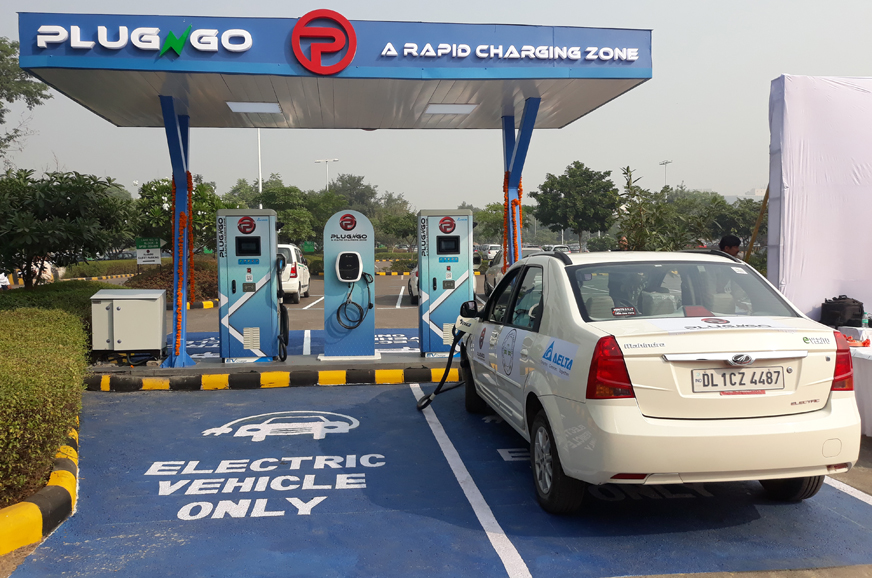
Government policies and support mechanisms remain a key determinant of the EV landscape in India in 2026. The government’s PLI scheme for the development of new battery technology and the clean mobility initiative are expected to promote the development of the EV sector in India.
At the state level, the key cities of Delhi, Maharashtra, and Karnataka are developing charging infrastructure and promoting the use of electric buses. The public sector’s efforts to develop fast-charging corridors are expected to improve the use of EVs in the coming years.
However, the lack of charging infrastructure in semi-urban and rural areas continues to be a challenge for the adoption of EVs.
Battery Supply Chain and Industrial Implications
The development of the Indian EV market is also closely associated with the battery supply chain and critical materials domain. The increasing demand for lithium-ion batteries is fueling investments in local cell production, recycling technologies, and supply chain localization. This is a significant development in the Indian context, as it will help the country reduce dependence on imported battery components, especially from East Asia.
From an industrial standpoint, the development of EV production is likely to have implications for the demand for battery materials like lithium, nickel, cobalt, and rare earths, and will position India as a new entrant in the global clean energy and mobility value chain.
Structural Challenges and Market Constraints
Despite the robust policy framework and increasing consumer interest, there are several structural challenges that continue to exist in 2026. These include the high cost of batteries, the lack of charging infrastructure, concerns about the resale value of EVs, and consumer range anxiety. In addition, price sensitivity continues to be the hallmark of the Indian automotive market, and this is likely to be the key determinant of EV purchase decisions.
The competition in the EV market is also heating up, with local players as well as foreign newcomers pouring significant investments into product development and localization plans. This competitive scenario is likely to speed up technological advancements, but at the same time, it will also create financial challenges for new EV startups.
Outlook: Gradual but Sustainable Electrification
In summary, 2026 is a transitional period for the EV industry in India, rather than a phase of complete electrification. The industry is witnessing a transition towards sustainable growth, which is fueled by the availability of economical vehicle options, favorable government policies, and developing capabilities.
Industry experts have a general consensus that the future of EVs in India will be different from that in developed countries, where the adoption of EVs will be driven by economical mobility solutions rather than luxury electric cars. As the infrastructure develops and battery technology becomes more economical, India is expected to become one of the quickest-growing markets for EVs in the world, especially in the economy and commercial vehicle segments.
In this context, the evolution of India’s EV ecosystem in 2026 represents not only a technological transition but also a significant industrial and economic transformation aligned with long-term decarbonization and energy security objectives.
Sources
Suzuki launches maiden EV in India with battery rental plan to lower upfront costs
India's Tata Motors targets mass EV adoption with low-priced, fast-charging Punch
Electric Car Sales Jan 2026: Tata Leads As EVs Rise 54.75% YoY
**********************************************************
BASUNDE, Rohini(Global PR & Reporter )

Based in India, Rohini works as a Reporter and Global PR professional,
leveraging her strong background in culture, society, and media studies.
Her work primarily involves article writing and managing global public relations campaigns.
Her core areas of interest are multiculturalism, intercultural understanding, and cross-cultural communication,
through which she disseminates information from a truly international perspective.
Hobbies: Drawing, photography, editing, traveling, and cooking.
If you have any business in India, please feel free to contact us via MIRU’s “Contact Us” form or by phone.
**********************************************************


