

The growing e-waste generation in India is slowly being acknowledged as a secondary resource base for key minerals like lithium, cobalt, nickel, and rare earths, which are required for the production of electric vehicles, renewable energy technologies, electronics, and defense purposes. Industry trends, as reported by Indian financial news outlets, show that dedicated recycling units are now being used to recycle used batteries and electronics to extract high-value metals that would otherwise end up in landfills or scrap yards.
According to the Global E-waste Monitor, a publication by the United Nations Institute for Training and Research (UNITAR) and the International Telecommunication Union (ITU), India generates over 1.6 million metric tons of e-waste every year, ranking it among the top e-waste-generating countries in the world. Figures from the Central Pollution Control Board (CPCB) also show a steady rise in the generation of e-waste from one year to another due to the increasing digitalization of the country.
Strategic Significance of Critical Minerals
The electronic waste has a diverse composition of materials of economic significance. Lithium-ion batteries used in smartphones, laptops, and electric cars contain lithium, cobalt, nickel, and manganese, whereas printed circuit boards and electronic components are made of copper, gold, silver, and palladium. The International Energy Agency (IEA) has estimated that the demand for critical minerals could rise by up to four times by 2040 due to the clean energy transition, mainly due to battery storage and electric mobility.
Presently, India is a large importer of most critical minerals like lithium and cobalt, which makes its manufacturing sector vulnerable to geopolitical supply chain risks and global price fluctuations. The development of conventional mining projects for critical minerals is a time-consuming and capital-intensive process, whereas recycling is a relatively faster alternate means to meet the raw material requirements of high-tech sectors.
Policy Framework and Government Incentives
The regulatory framework has been an important factor in the fast-tracking of the recycling infrastructure in India. The E-Waste (Management) Rules, notified in 2022 by the Ministry of Environment, Forest and Climate Change, improved the Extended Producer Responsibility (EPR) regime, requiring producers, importers, and brand owners to take responsibility for the environmentally sound recycling of end-of-life electronic products. The policy framework also included digital tracking mechanisms to enhance the recycling process.
The government has also factored recycling into its resource security policy framework under the National Critical Mineral Mission and other initiatives. The policy framework includes financial support for recycling infrastructure and technology development and expansion, which are specifically targeted at the extraction of critical minerals from e-waste and spent lithium-ion batteries. The government policy framework projects the target of scaling up recycling capacity to hundreds of kilo tonnes per year.
Industrial Expansion and Technological Advancements
The Indian recycling industry is witnessing the growing use of modern hydrometallurgical and pyrometallurgical processing technology by formal recyclers in India to recover high-purity metals from complex waste materials. Industry studies and NITI Aayog reports on battery recycling suggest that recycling in India can help the country’s electric vehicle industry by providing secondary raw materials for the manufacture of batteries and cutting the country’s reliance on imported mineral concentrates.
Market trends also suggest that the recycling industry is witnessing increased participation by the private sector, with recycling companies enhancing their lithium-ion battery recycling capacities and setting up automated dismantling and refining lines. These technological improvements enable greater recovery of lithium, cobalt, and nickel than is possible through manual dismantling.
Industrial Expansion and Technological Advancements
The Indian recycling industry is witnessing the growing use of modern hydrometallurgical and pyrometallurgical processing technology by formal recyclers in India to recover high-purity metals from complex waste materials. Industry studies and NITI Aayog reports on battery recycling suggest that recycling in India can help the country’s electric vehicle industry by providing secondary raw materials for the manufacture of batteries and cutting the country’s reliance on imported mineral concentrates.
Market trends also suggest that the recycling industry is witnessing increased participation by the private sector, with recycling companies enhancing their lithium-ion battery recycling capacities and setting up automated dismantling and refining lines. These technological improvements enable greater recovery of lithium, cobalt, and nickel than is possible through manual dismantling.
Economic and Geopolitical Implications
The recoverable value present in India’s electronic waste stream is deemed economically relevant. Industry estimates mentioned in policy and market research indicate that urban mining in India may be a multi-billion-dollar opportunity as the demand for battery metals and electronic materials continues to increase. The ability to source materials locally mitigates risks associated with global supply chain disruptions, especially in light of the dominance of global mineral processing capacity in a few countries.
From a geopolitical standpoint, enhancing local recycling capabilities is part of the broader international push to diversify critical mineral supply chains. India’s engagement in international resource security talks and supply chain resilience efforts indicate a growing understanding of the strategic role of recycling in addition to mining and sourcing.
Environmental and Circular Economy Perspectives
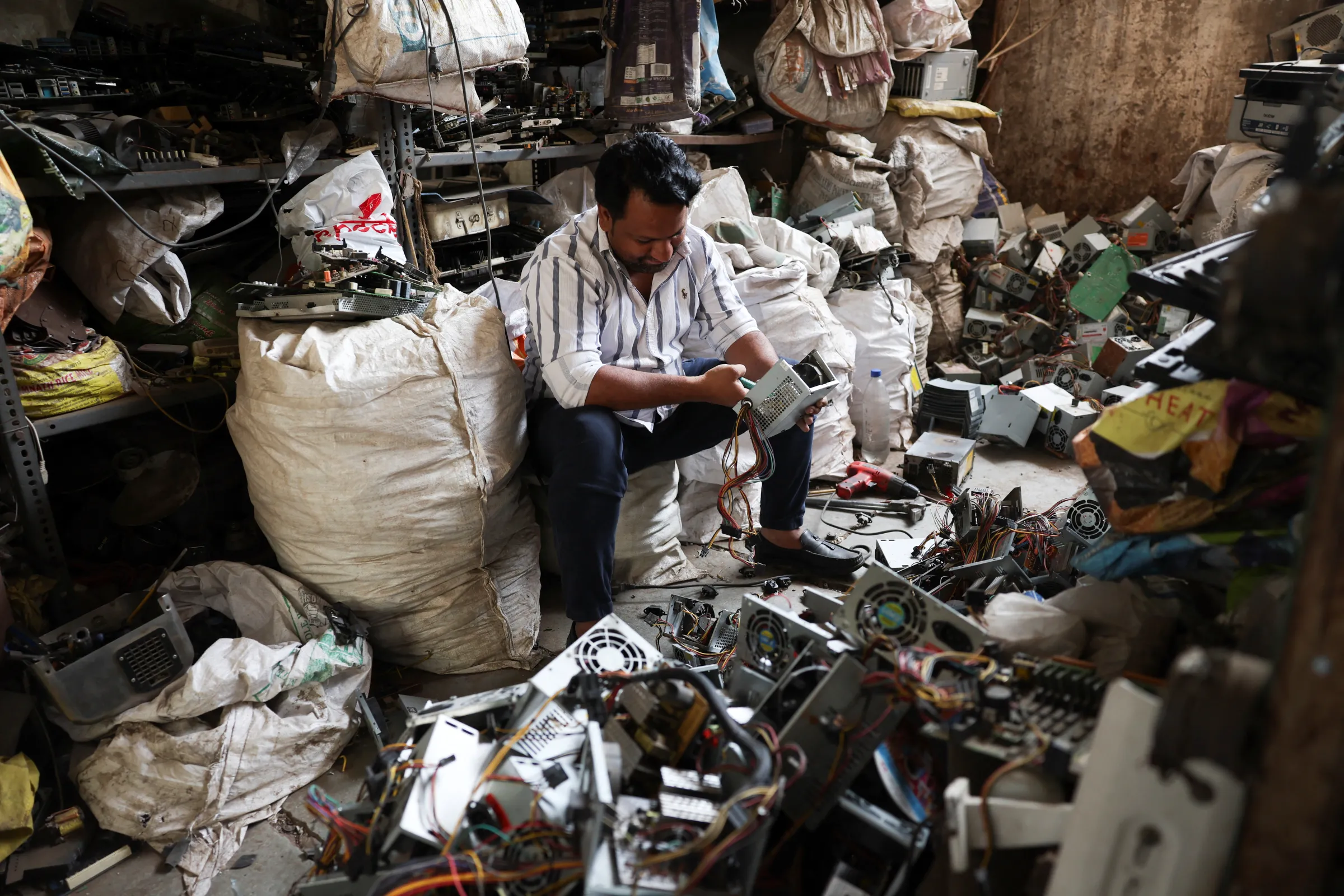
Effective and environmentally responsible e-waste recycling is also important in addressing the pollution risks posed by the improper disposal of dangerous materials like lead, mercury, and cadmium. The United Nations Environment Programme (UNEP) has specifically highlighted that proper recycling practices can help minimize environmental pollution and protect natural resources by reducing reliance on primary mining. Moreover, the energy required for metal extraction from recycled materials is significantly lower than that for metal extraction from primary ore, thereby helping to reduce emissions and promote sustainability.
As the circular economy initiative gains momentum in India, the importance of incorporating e-waste recycling into the country’s industrial and environmental policies is also becoming more prominent. Although the issues of infrastructure development, technology, and the integration of the informal sector remain, the extraction of critical materials from electronic waste is also being viewed as a significant element of India’s overall economic, industrial, and technological development strategy.
Sources
Junk to high-tech: India bets on e-waste for critical minerals
Critical Mineral Recycling Incentive Scheme
India leverages e-waste to reduce critical mineral import dependence
India's E-Waste Boom: Attero Fuels Critical Minerals Push with ₹150 Cr Expansion
India's E-Waste Mineral Push Faces Hurdles Amidst Global Competition
**********************************************************
BASUNDE, Rohini(Global PR & Reporter )

Based in India, Rohini works as a Reporter and Global PR professional,
leveraging her strong background in culture, society, and media studies.
Her work primarily involves article writing and managing global public relations campaigns.
Her core areas of interest are multiculturalism, intercultural understanding, and cross-cultural communication,
through which she disseminates information from a truly international perspective.
Hobbies: Drawing, photography, editing, traveling, and cooking.
If you have any business in India, please feel free to contact us via MIRU’s “Contact Us” form or by phone.
**********************************************************


